
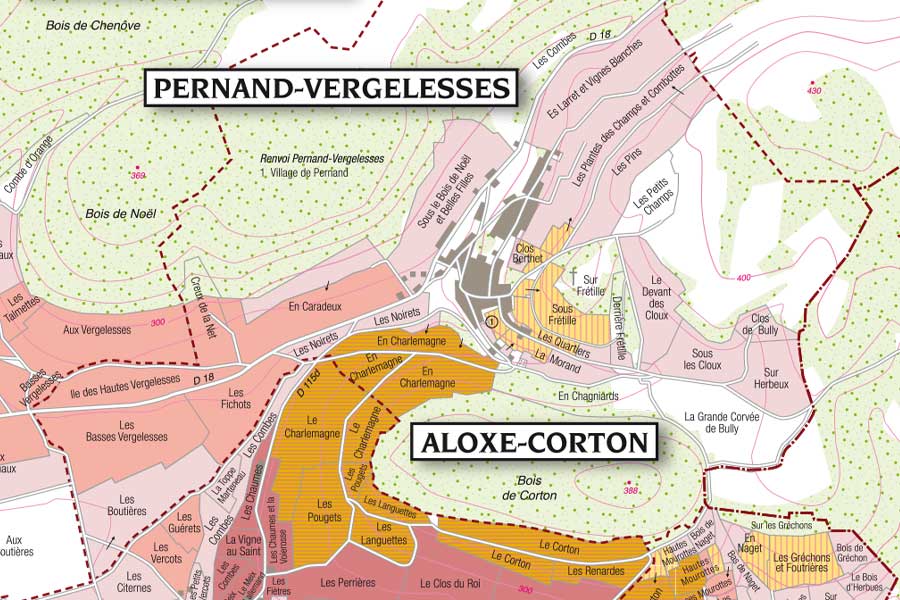
Located six kilometers north of Beaune, Pernand-Vergelesses, a charming little medieval village, nestles in a valley surrounded by vineyards. Above it, on a wooded hill at a place called “Frétille,” stands Notre Dame de Bonne Espérance, a small chapel offering a magnificent view of the entire Côte de Beaune.
The Pernand-Vergelesses vineyard, covering a defined area of 205 hectares (including 68 hectares of Premier Cru), spreads out like a fan: on one side, the steep Corton mountain, from which Pernand owns a portion of and whose vineyards face west; on the other, the gentler slope of Vergelesses. On the side of the hillside that leads to Savigny, Pernand boasts several high-quality Premier Crus, primarily Ile des Vergelesses and Vergelesses.
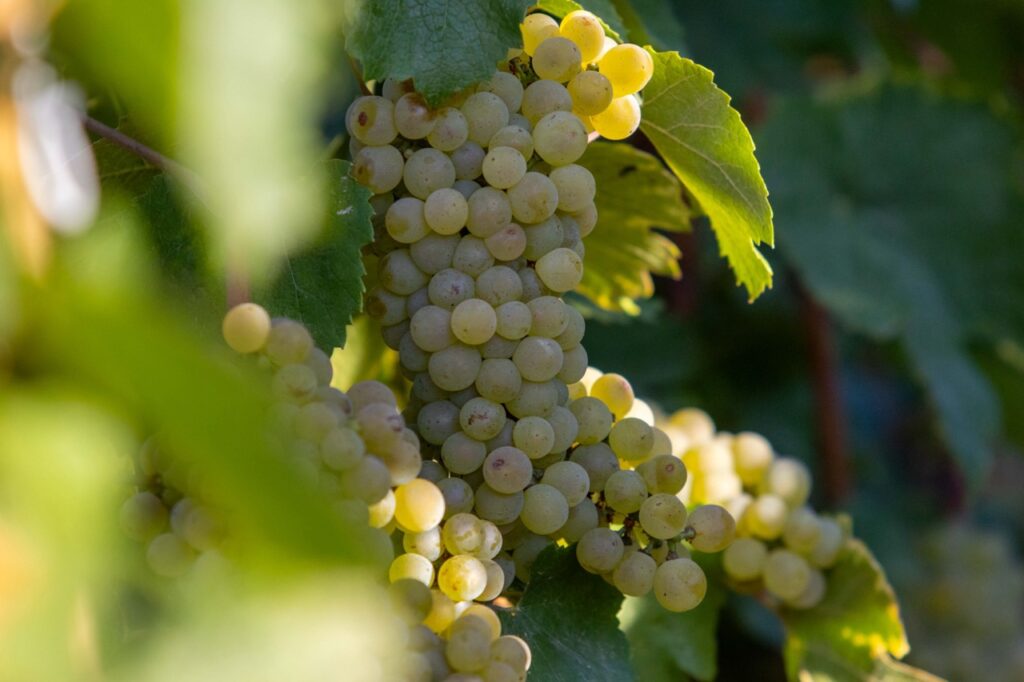
Pernand has always shown a preference for white wines. Thanks to relatively cool exposure, the Chardonnay grape produces fresh, fruity, and slightly spicy white wines in Pernand-Vergelesses that age remarkably well. This grape variety shines in the Corton-Charlemagne wines. It is also worth noting the excellent Aligoté wines, which have long been a specialty of the village, as this grape variety used to grow all the way up to the slopes of Charlemagne. Red wines from Pernand-Vergelesses still make up the vast majority, however. When they are at their best—especially in warm vintages—they display lovely structure and true distinction, without the excessive richness sometimes found in Aloxe or Ladoix. Less well-known than Aloxe-Corton, Pernand-Vergelesses wines offer excellent value for the price! We’ve selected Domaine Dubreuil-Fontaine, which produces Pernand-Vergelesses wines as well as Corton and Corton-Charlemagne.
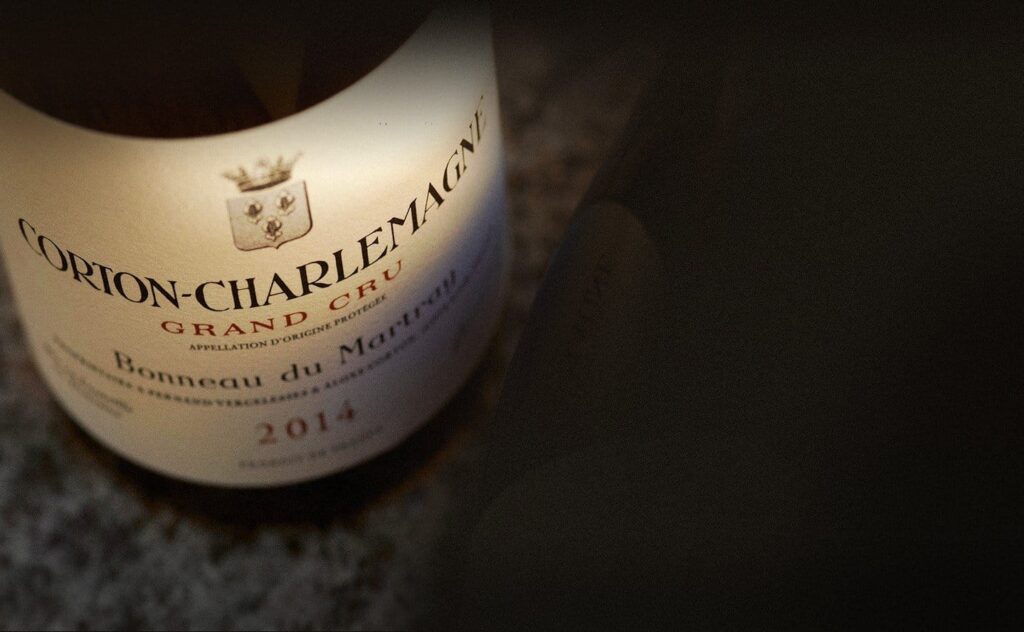
One cannot speak of Pernand-Vergelesses without mentioning Domaine Bonneau du Martray, with its 11 hectares consisting exclusively of two grands crus: Corton-Charlemagne (9.5 ha) and Corton (1.5 ha). A single, contiguous estate at the junction of the Aloxe and Pernand village boundaries, where the Carolingian ruler likely owned this “Clos Charlemagne,” the origin of the appellation. It was in the historic heart of Corton that the Bonneau du Martray family acquired their vineyards in the late 18th century. Their lineage—which is said to have included Nicolas Rolin among its ancestors—continued through René Bonneau du Martray, who ruled for a good half-century over an estate that had been somewhat diminished by the passage of time, leasing his vineyards and selling his wine to merchants. Since he had no direct heirs, in 1969 he bequeathed the estate to his niece, Countess Le Bault de la Morinière, a native of the Mauges region. His son, Jean-Charles, took over as director. Today, it is E. Stanley Kroenke who continues this renowned estate’s quest for perfection.
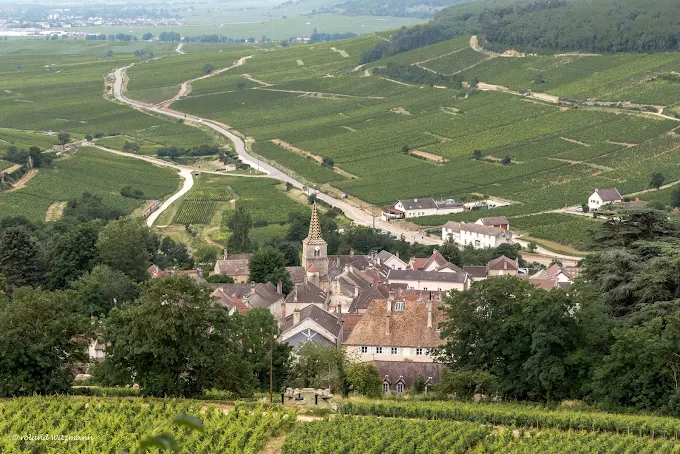
This village, with its narrow, cobblestone streets, stone winemakers’ houses topped with flat Burgundian tiles, vaulted cellars, and antique wine presses, bears witness to a centuries-old winemaking tradition. Among the architectural landmarks worth visiting is the Gothic-style Saint-Martin Church, which was rebuilt in the 19th century but whose foundations date back to the Romanesque period. Folk singer Graeme Allwright is buried in this cemetery. Also worth seeing is Jacques Copeau’s house, which dates from the early 18th century and was listed as a historic monument in 2014. There are also a few restored public washhouses—which served as hubs of community life until the early 20th century—and natural spring fountains, remnants of the residents’ ingenuity in water management.
A stop is a must in this picturesque village at the foot of the magnificent Corton Hill, crowned by Charlemagne’s cross—a designated natural site and an exceptional wine-growing region.
